
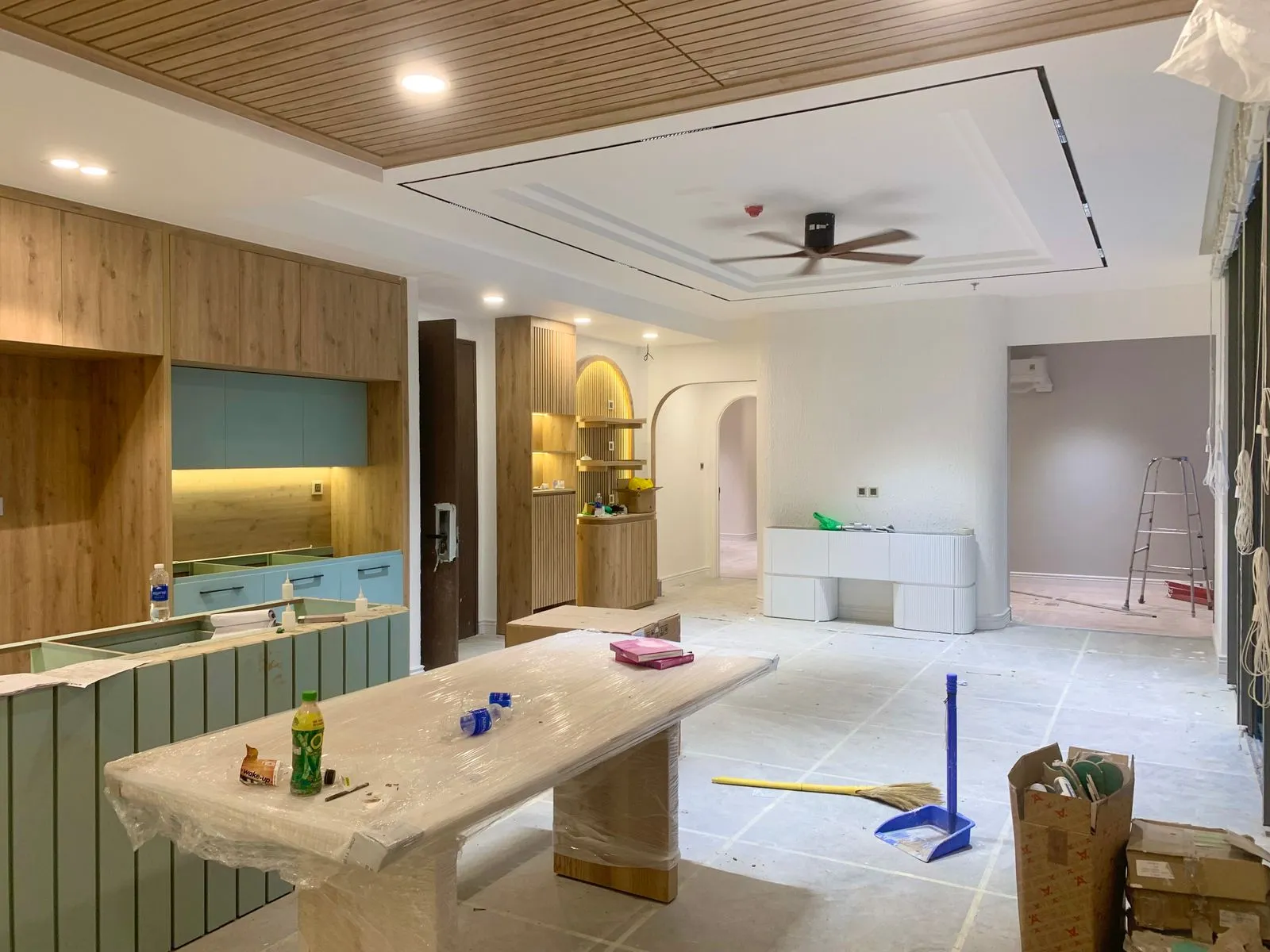
Yes, a ceiling fan can often be installed on a sloped ceiling, but the fan must hang level and have enough room to turn safely. The ceiling angle, ceiling height, fan design, and electrical box all affect which mounting setup will work. A standard flush mount may not suit a steep slope. Before choosing a fan, check its manual for slope limits and compatible mounting hardware, then confirm that the ceiling structure can support the installation.
Choose the Right Mount
Many fans include a downrod mount that can accommodate a modest ceiling angle. The downrod lets the motor hang below the slope, helping the fan sit level. Check the product specifications rather than assuming every downrod mount works at every angle. Some fans require a separate angled-ceiling adapter, especially when the slope exceeds the limit stated in the manual.
An angled-ceiling adapter connects the fan canopy to the ceiling while keeping the fan assembly vertical. Pair it only with fan models listed as compatible. If the ceiling is steep, the adapter may also require a longer downrod so the fan clears the slope and nearby walls. Avoid improvised brackets or modifications that the manufacturer does not approve.
Check Clearance and Height
Measure the ceiling angle and the available space around the fan before purchasing hardware. The blades need clear space from the sloped surface, walls, beams, and light fixtures throughout a full rotation. A fan that appears to fit when stationary can strike an obstruction once the blades move. Follow the manufacturer’s clearance requirements for the exact fan and mounting setup.
A downrod can improve blade clearance, but it also lowers the fan. Check the finished height against applicable local requirements and the fan instructions, particularly in rooms with low ceilings or frequent foot traffic. If the room has a very high ceiling, choose a downrod length that places the fan where it can circulate air effectively without compromising safety.
Verify Electrical Support
The electrical box must be rated to support a ceiling fan and firmly attached to framing or an approved support brace. A standard light-fixture box may not be suitable. On a sloped ceiling, the fan’s weight and movement still place demands on the mounting point, so inspect the support before installation rather than relying on the box’s appearance.
Turn off power at the breaker before any inspection or installation, and verify that the circuit is off. If the box is loose, not fan-rated, or difficult to access, have a qualified electrician assess it. Follow the fan’s wiring diagram and local electrical code. Do not install a fan where the structure or wiring cannot be confirmed as safe.
Know When to Get Help
A straightforward installation may be manageable when the fan, adapter, downrod, electrical box, and slope are all clearly compatible. Read the fan manual before starting and gather the required hardware. If the manual does not list your ceiling angle, contact the manufacturer for guidance instead of guessing about adapter fit or maximum slope.
Professional help is a sensible choice for steep or unusually shaped ceilings, uncertain framing, high ceilings, or wiring that needs changes. In Fargo, Prairie Fan Co. can help assess mounting options for an angled ceiling. Confirm the installer’s proposed hardware and clearance plan before work begins, and ask that the finished fan be checked for secure attachment and smooth operation.
A sloped ceiling does not automatically rule out a ceiling fan. The right combination of an approved angled mount, suitable downrod, safe blade clearance, and fan-rated electrical support makes the difference. Check the manufacturer’s specifications first, and consult a qualified installer if any part of the setup is uncertain.